
RESEARCH BRIEF
RYBODYN MAPS A CRYPTIC HUMAN PROTEOME

RYBODYN UNVEILS A HIDDEN HUMAN PROTEOME AND A NEW UNIVERSE OF ACTIONABLE CANCER TARGETS
Powered by RyboCypher , its proprietary AI-assisted proteogenomics platform, RyboDyn introduces proteins science didn t know existed—and reveals cYBX1, a cryptic isoform of the well-known cancer driver YBX1.
On August 6, 2026, RyboDyn, Inc. released a preprint “Discovery and Targeting of a Cryptic Human Proteome,” mapping an entire layer of human biology that the field has systematically missed, and showing it is dense with the tumor-specific targets cancer drug developers have run short of. Concretely, this cryptic human proteome comprises tens of thousands of peptides (the detectable fragments of the larger full-length cryptic proteins they come from) encoded by regions of the human transcriptome that reference annotations have never captured.
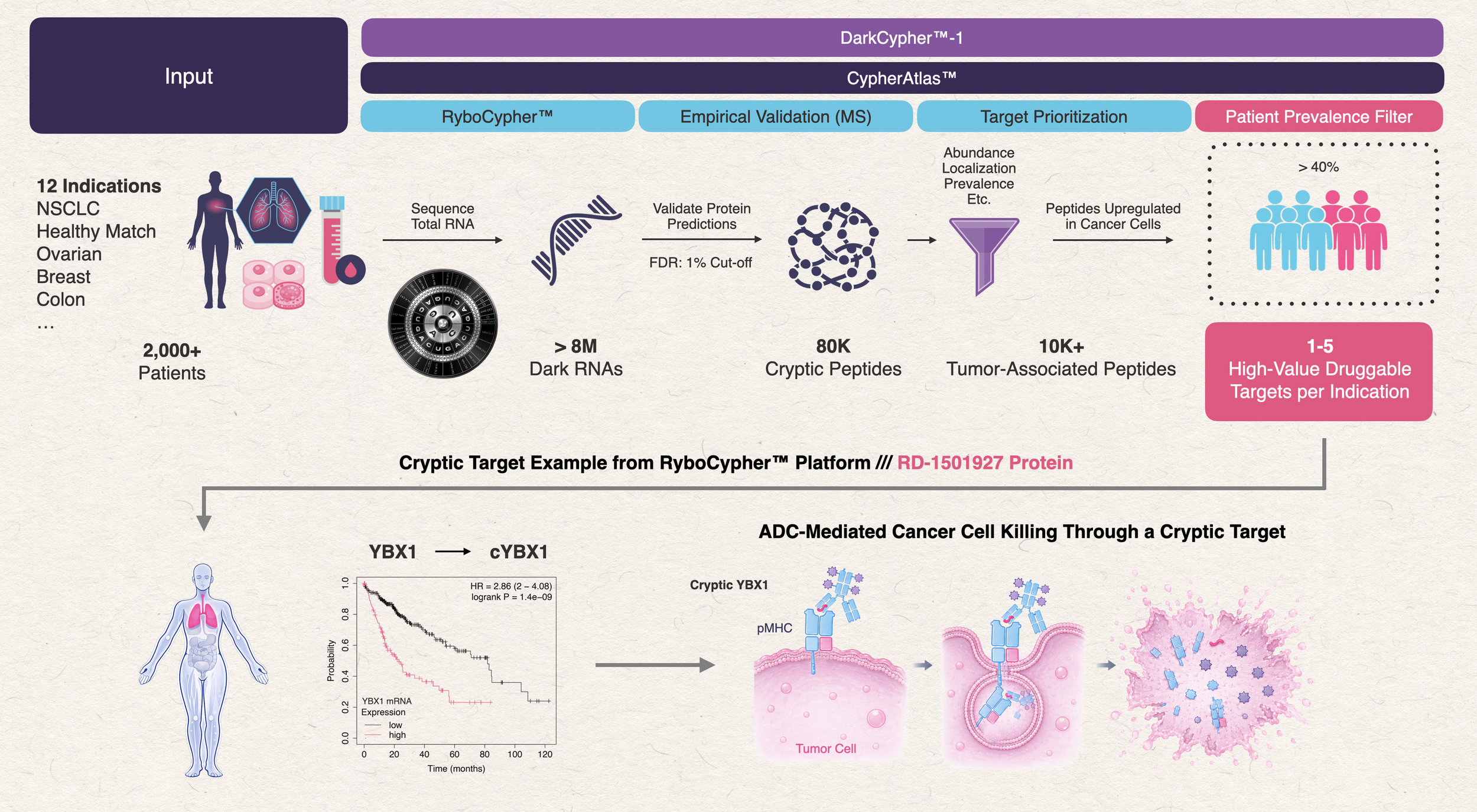
Applied across cancer cell lines, patient tumors, and matched healthy tissue, RyboCypher™, the company’s proprietary AI-assisted multi-omics target discovery platform, resolved approximately 6.6 million “dark” RNAs, more than 97% of which are absent from existing databases.
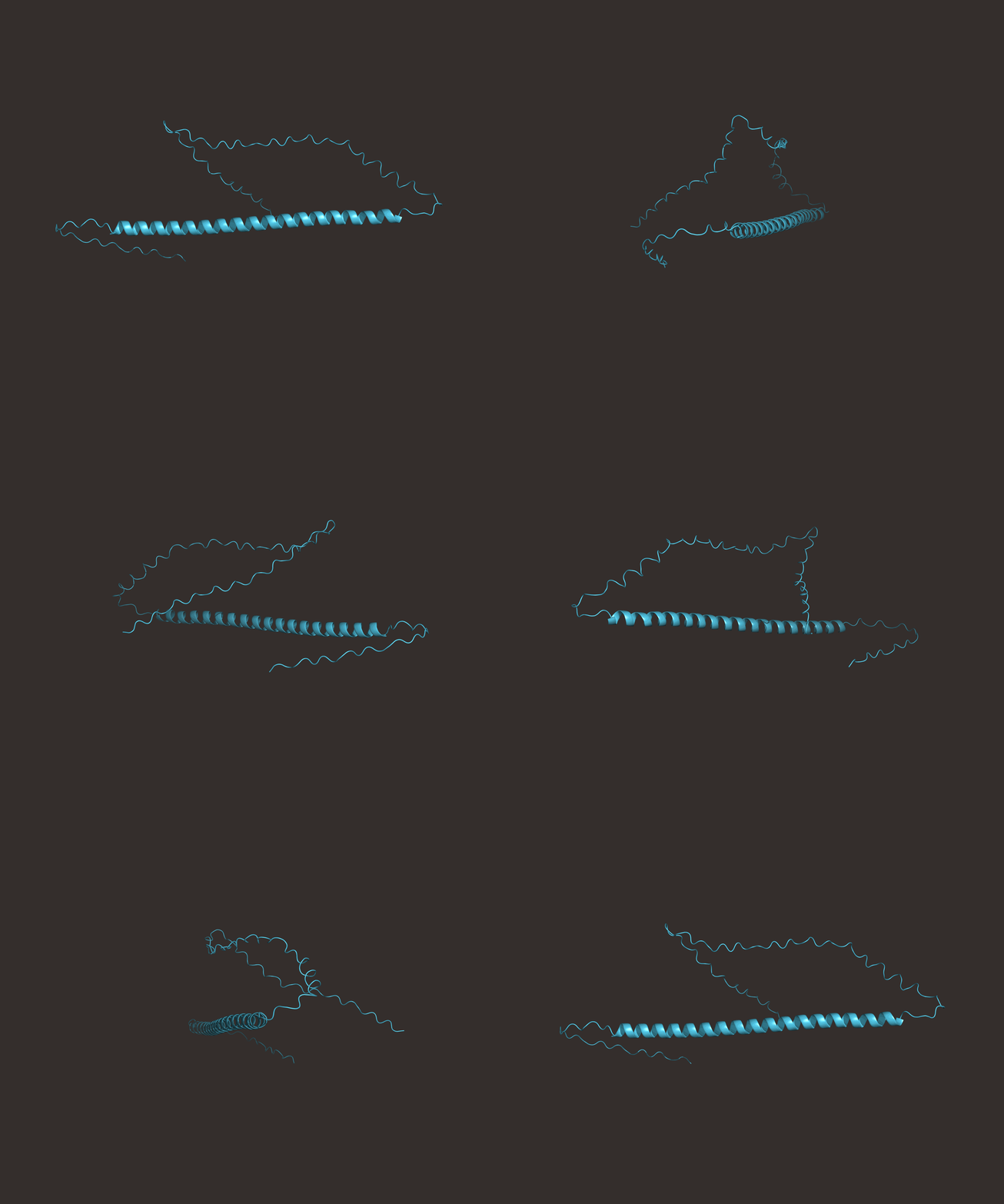
ESMFold2 structural model of the cryptic YBX1
Armed with the novel reference transcriptome, RyboDyn searched against roughly half a billion mass spectra drawn from 2,229 patient samples, and empirically confirmed ~80,000 cryptic peptides including ~10,000 that are prevalent in cancer. These datasets were used to establish CypherAtlas™, a database of dark RNAs, their cryptic encoded proteins and associated patient data. Benchmarked directly against the microprotein and peptidein catalogs published in Nature in May 2026 by the TransCODE Consortium — a major international effort spanning GENCODE, PeptideAtlas, and the Human Proteome Organization — CypherAtlas expands the catalogued human proteome by a wide margin.

THE REAL BOTTLENECK IN PHARMA IS NEW BIOLOGY
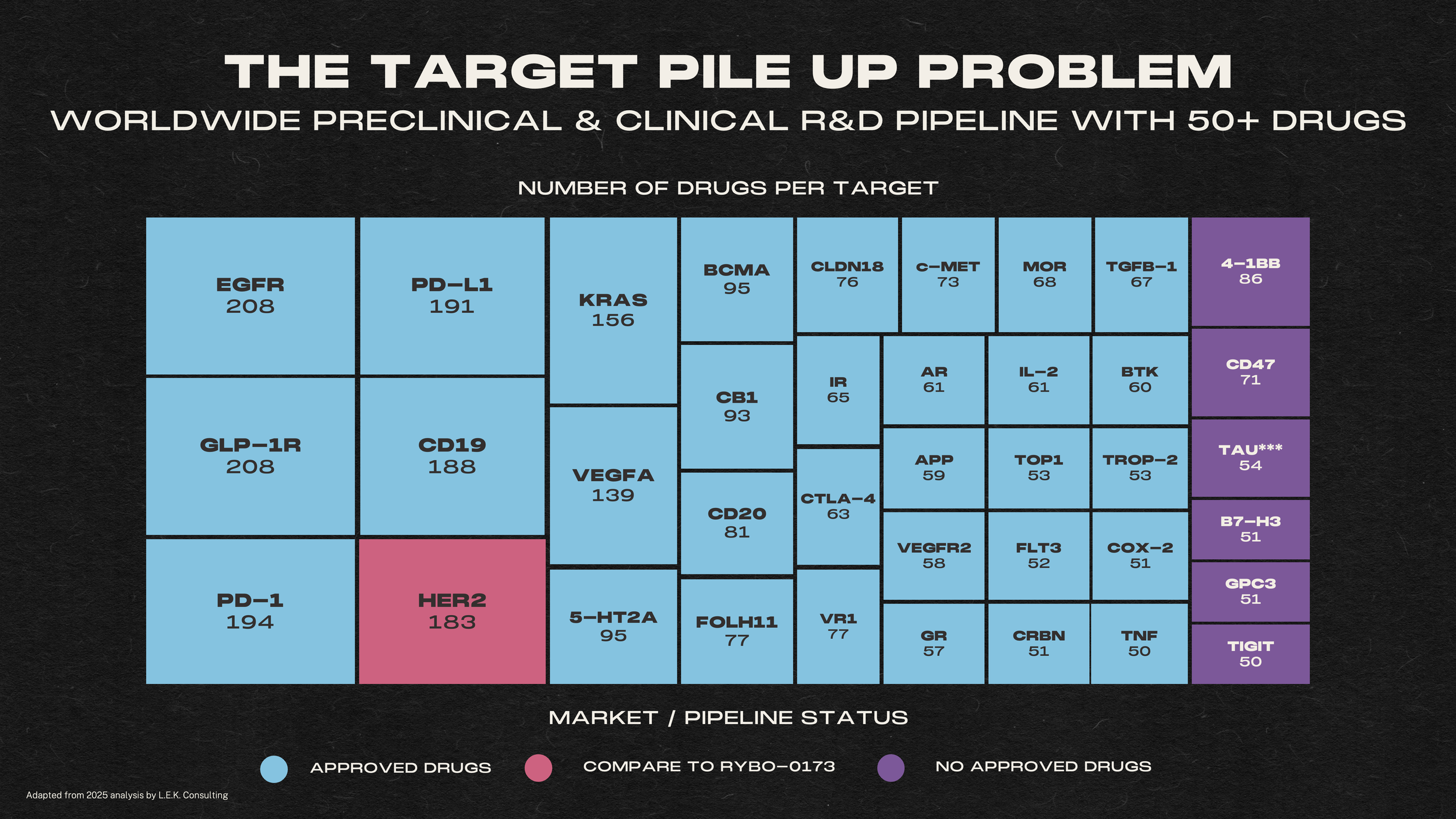
Cancer devastates lives in every form, yet making drugs is no longer the constraint. Molecular design is faster and better resourced than ever, with AI accelerating it further. The limiting factor now is biology itself, the supply of new therapeutic axes worth targeting. When new cancer biology is discovered, it leads to a new wave of blockbuster drugs (e.g. HER2, PD-1/PD-L1). 25% of the global preclinical and clinical pipeline converge on just 38 biological targets according to a 2025 analysis by L.E.K. Consulting. The rate at which genuinely novel targets enter the pipeline has fallen from around 100 per year a decade ago, to roughly 30 in 2024. The result is a field of highly duplicative programs, all competing over the same well-characterized target proteins. This approach persists while the biology unique to malignant cells may go entirely untouched. Not because the biology isn’t there, but because the tools that are used to infer proteins are anchored to well-annotated RNA. Therefore, the hidden proteins were systematically missed, and completely excluded as potential targets of disease.
What RyboCypher returned is not a handful of curiosities. These cryptic peptides map to exactly the protein classes drug hunters have pursued for decades: deubiquitinases, E3 ligases, and transcription factors from cellular proteomics; cell adhesion molecules, transporters, and receptors from membrane proteomics. These protein classes are now surfacing in cryptic, tumor-restricted form for the first time.
"Oncology is overdue for another checkpoint-inhibitor moment,” said Corey Dambacher, Ph.D., President and co-founder of RyboDyn and senior author of the study. “That doesn't come from finding a different way to go after the same three dozen targets. We can really only accomplish that by discovering new biology, and RyboCypher is built to find it."

Corey Dambacher, Ph.D.

BIOLOGY THAT TODAY’S AI COULD NOT HAVE PREDICTED
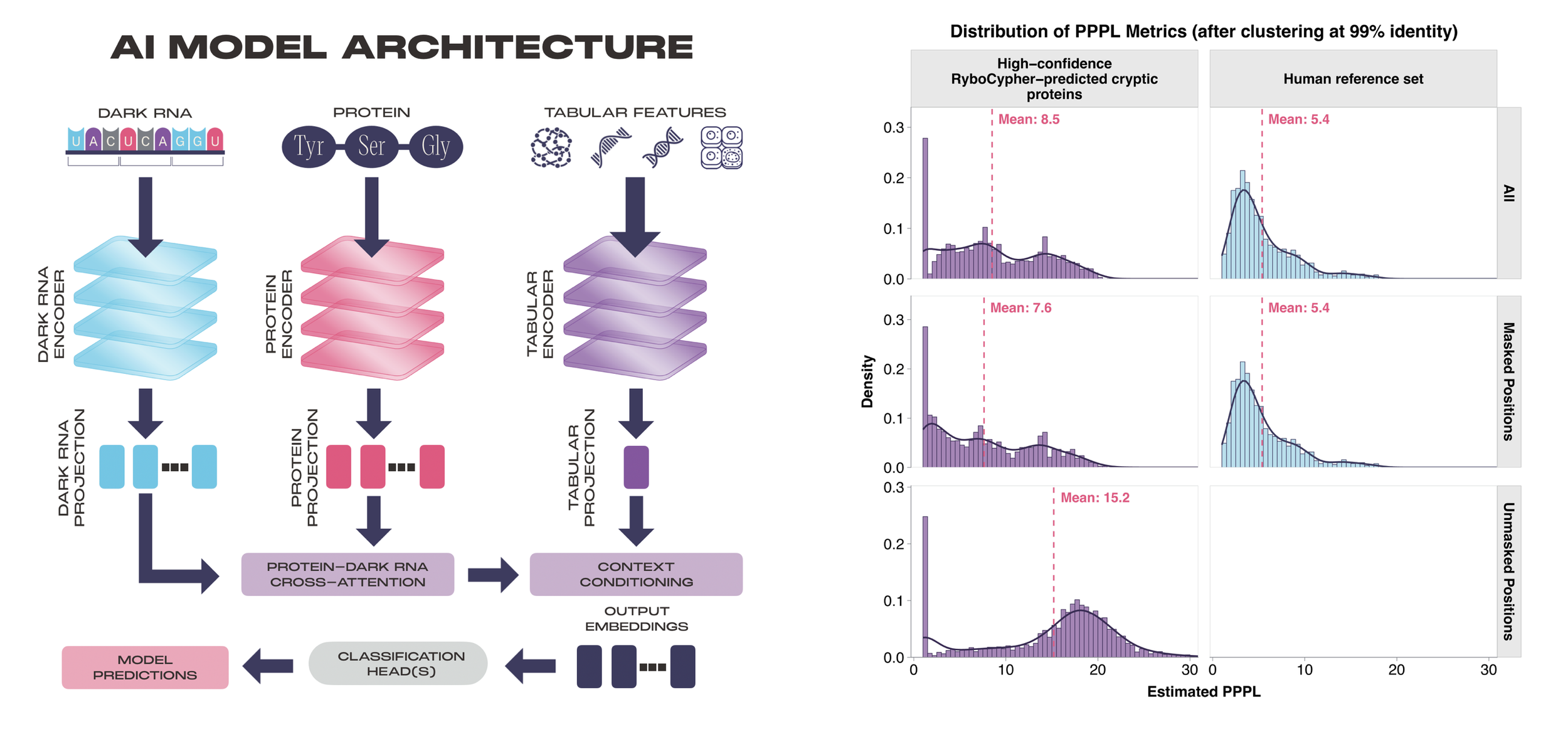
To test whether these were plausible proteins rather than statistical noise, RyboDyn scored thousands of high-confidence predictions against the ESM-2 protein language model. The cryptic sequences registered markedly elevated pseudo-perplexity — a measure of how unexpected a sequence is to a model — with the signal concentrated almost entirely in the novel regions absent from every reference annotation. When those same sequences were run through ESMFold2, structure prediction largely returned confidently folded models.

Imad Ajjawi, Ph.D. MBA
“These proteins were, in the most literal sense, perplexing to the best protein language models available,” said Imad Ajjawi, Ph.D., CEO and Co-Founder of RyboDyn. “AI could not have guessed this biology existed, not because the models are weak, but because this entire layer is absent from the training data. We're the only ones generating it. Yet the sequences are nowhere near random, as proteins they’re statistically novel, but structurally sound. When we fold them we get well-organized domains that are structurally conserved in nature. That’s why we’re building DarkCypher™ on our own data. As it sees more of these examples, it becomes attuned to and eventually predictive of a layer of biology no existing model can reach.”

PATIENT-FIRST DISCOVERY, FROM THE VERY FIRST EXPERIMENT
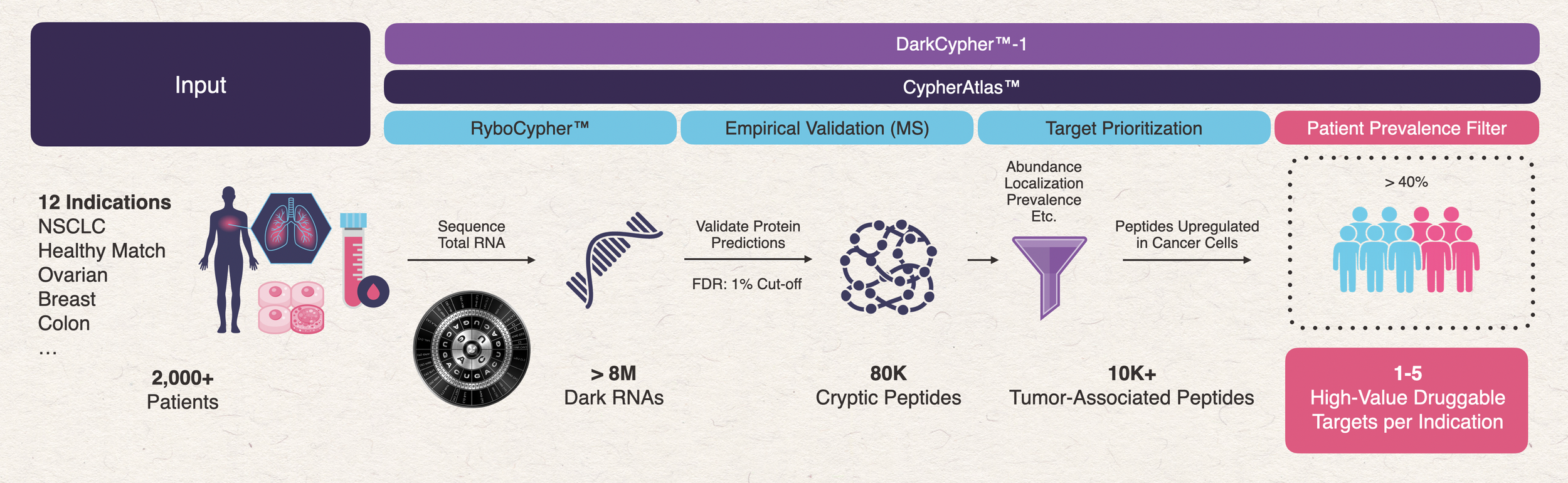
The company’s approach inverts drug discovery’s conventional workflow: instead of starting in a petri dish and ending with the patient, it starts with the patient. Every cryptic target in CypherAtlas arrives already annotated with indication, patient prevalence, expression, and survival association, so target selection and patient stratification happen in the same step, before a single antibody is engineered.
TWO ROUTES TO TUMOR CELL DEATH
The most immediate path to actionable therapeutic targets starts with what the tumor displays on its surface, where an antibody has a distinct molecular handle to latch onto and selectivity is built into the sequence itself. Two routes follow: (1) cryptic membrane proteins with exposed extracellular domains, directly accessible to conventional antibodies, ADCs, T-cell engagers, and radioligands; and (2) cryptic intracellular proteins presented as peptide-MHC (pMHC) complexes, addressable by T-cell receptor mimic (TCRm) antibodies. Depending on the selection criteria, the framework yields an estimated 1–5 high-value druggable targets per indication across both routes.
RyboDyn's top-ranked cell-surface candidate is upregulated roughly ~7.5-fold in ~80% of the lung squamous cell carcinoma patients assessed (a cohort of over 100), with significant tumor upregulation also seen in clear cell renal cell carcinoma (ccRCC) and pancreatic ductal adenocarcinoma (PDAC). That candidate survived a deliberately strict triaging criterion. Of the 18,372 cryptic peptides CypherAtlas identified in membrane proteomics preparations, each was scored on a composite of tumor-versus-healthy expression, transmembrane topology, and subcellular localization — and to advance, the detected peptide had to sit within genuinely non-canonical protein sequence while its cryptic full-length protein carried a cryptic extracellular or membrane-exposed domain.
FIRST DISCLOSURE: CRYPTIC YBX1
RyboDyn’s CypherAtlas contains over 12,000 cryptic pMHC species, of which over 8,000 were only observed in cancer samples, now the largest cancer-associated pMHC database in the world. RyboDyn discloses cryptic YBX1 (cYBX1), a previously unreported cancer-associated protein expressed from the YBX1 locus. Canonical YBX1 has long been recognized as a major oncogenic regulator and has proven stubbornly difficult to drug directly. cYBX1 bears no significant homology to the human proteome yet contains a high level of sequence homology to proteins expressed by distant organisms from the same locus, especially across the evolutionarily conserved DNA-binding domain. This cryptic open reading frame (ORF) gives rise to a tumor-restricted pMHC, representing an entirely new therapeutic handle on a well-known oncogenic locus. TCR-mimic antibodies raised against this cryptic pMHC bind with high affinity and exquisite specificity, discriminating the target from its most closely related sequences. A single antibody recognized the target across three closely related HLA-A*02 isoforms, raising the addressable population to over 45% of Western Europeans and North Americans. Formatted as an antibody-drug conjugate, the lead produced selective tumor cell killing in vitro.
“This work establishes the principles and validates the concepts RyboDyn is pursuing. It provides strong support for the company’s approaches,” said Gordon B. Mills, M.D., Ph.D., a world-renowned precision oncologist and Director of the SMMART trials in the Knight Cancer Institute at Oregon Health and Science University.

Gordon B. Mills, M.D., Ph.D.
READ THE PAPER
Joel M. Chick*, Ashley R. Woodfin*, Jessica Weir, Marco Blanchette, Ariel S. Schwartz, Leopold Garnar-Wortzel, Christopher A. Polera, Sebastian C.J. Steiniger, Marcus Kelly, Kerry Wilson, Jon A. Bass, Alex M. Jaeger, Imad Ajjawi, Corey M. Dambacher. Discovery and Targeting of a Cryptic Human Proteome. bioRxiv. 2026. doi:10.64898/2026.08.05.743124.
*These authors contributed equally.